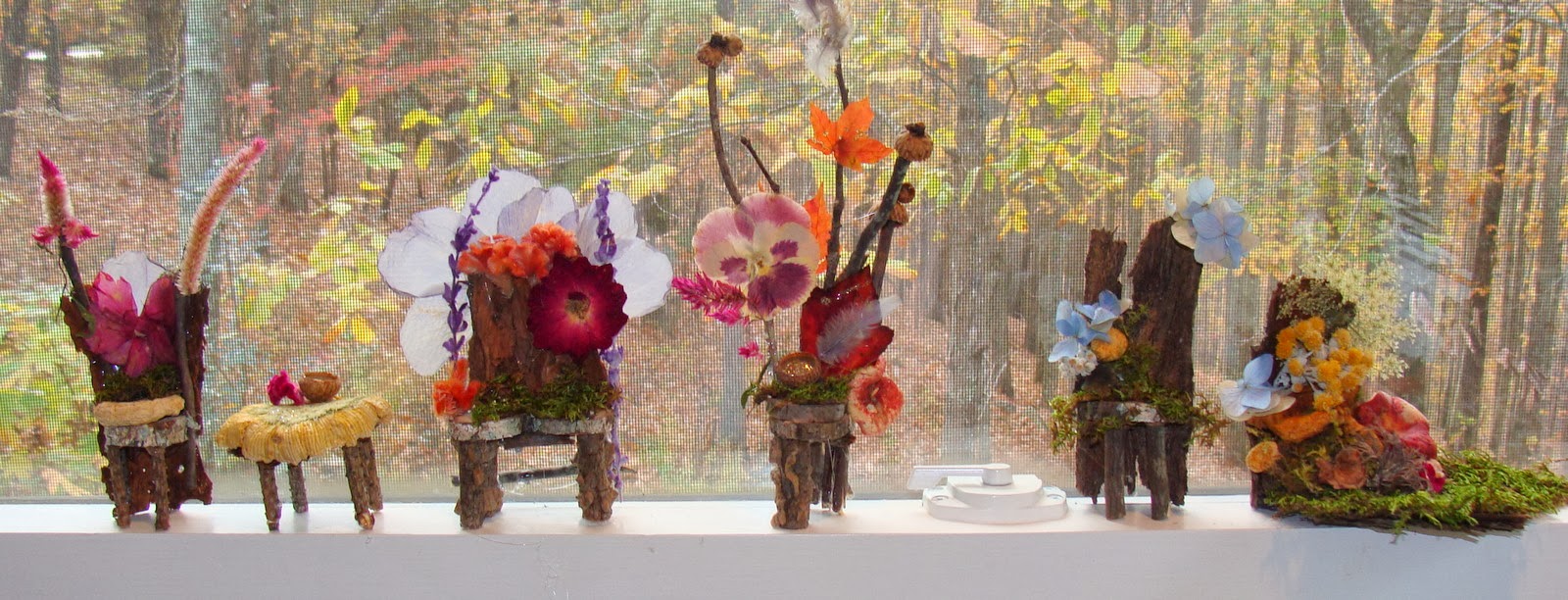
Pictures from the March 29, 2014 Knight Southeastern doll show and sale held at the Trussville, Alabama Civic Center.
Tuesday, April 15, 2014
A few pictures from the April 13, 2014 doll club meeting
Here are a few pictures from the April 13, 2014 meeting of
the Birmingham Doll Club.
Jill S. presented
outgoing President Martha Hopkins with a Thank You gift from the doll club,
a Asian doll and a
cabinet.
Monday, April 14, 2014
SOLID DOME INFANT BABY DOLLS
Solid dome baby dolls appeared about 1909 and became very popular in the 1920's. Usually head circumference is used for sizing instead of height, because of the variance of body shapes in cloth or 5-piece bent limb composition bodies. Some have spray painted hair and some have brush stroked hair.Some have open mouths, and some closed. The open/closed mouth is a molded open mouth. Sometimes there are molded teeth, and some have celluloid teeth. Open mouths usually have a felt tongue. Some tongues are "wobbly." Some have glass sleep eyes and some have intaglio eyes (molded and painted). Rarely a baby will have pierced nostrils.
The Bye-Lo Baby designed by Grace Story Putnam with a 3-day-old baby for a model, was very popular. They are marked "Grace S. Putnam" and made by Kestner in Germany. They have a cloth frog body with flange neck. At lower left is a composition head. Early ones had a socket head and composition body.
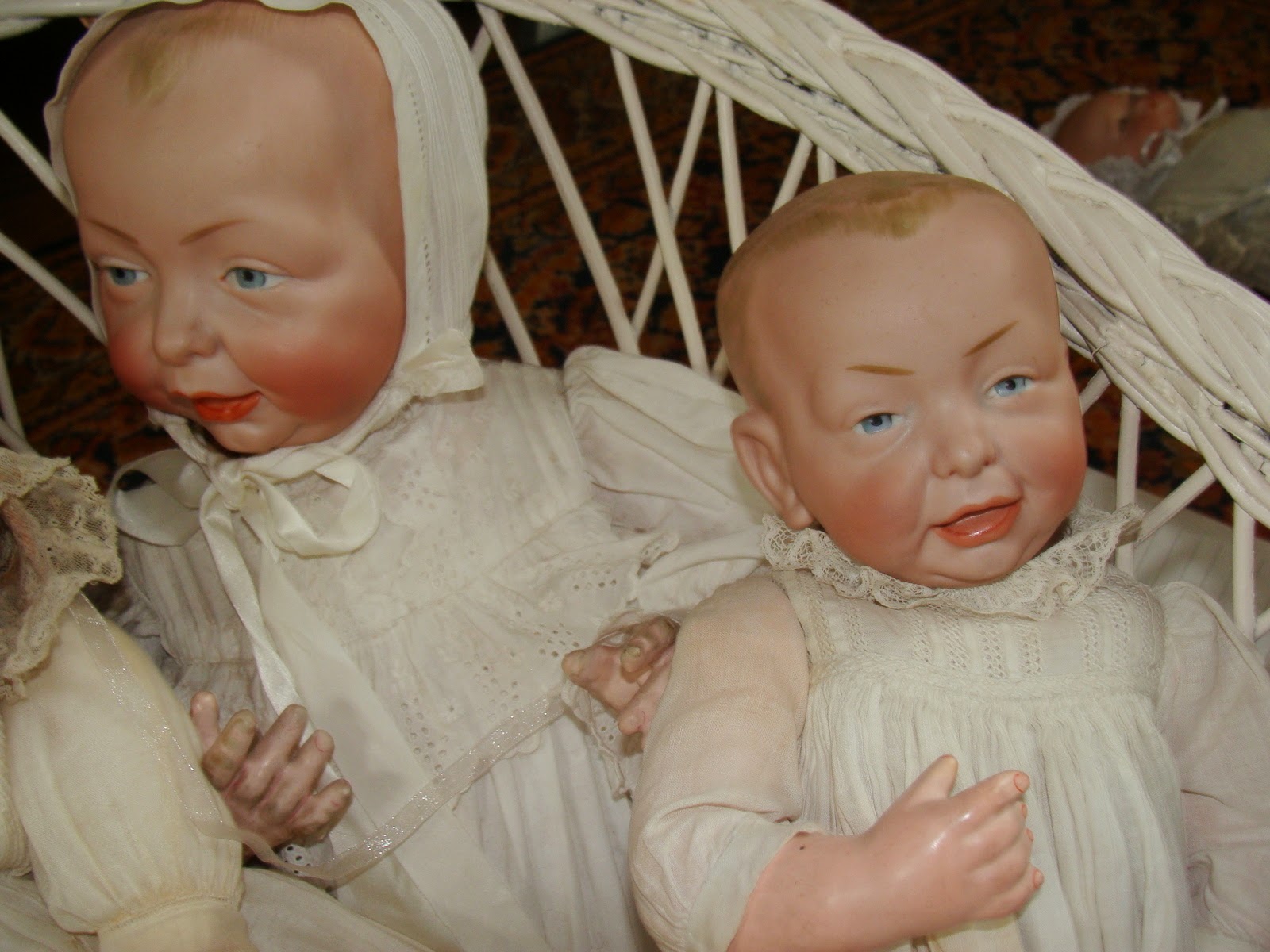
Here are examples of "Baby" by K Star R. They are marked K Star R 36. He is known as the Kaiser Baby because his bent arm looked like the Kaiser's "withered" arm.
Here are an A.M. RockaBye (back left) marked 351 and a mystery baby marked 3/11. In front is a Heubach marked "1."
Here are A.M. Dream Babies marked 341. They have straight-legged cloth bodies.
Tuesday, March 11, 2014
Friday, February 21, 2014
Thursday, February 13, 2014
Renwal Doll House Furniture (February Program)
Renwal Doll House
Furniture
The Renwal
Manufacturing Company was started in about 1939 by Mr. Irving Lawner (the name
“Renwal” is Lawner spelled backwards) in New York. The company produced toys from1945-1958 and
then went on producing other products until 1976. When toy production ceased the molds for the
furniture were sold. Other companies
produced the furniture including “Empire Company” and companies in Hong
Kong. One must be careful when buying
the furniture. The original mold
markings may still be on later pieces, but the quality was not up to Renwal
standards. The doll house furniture
could be bought in stores such as Woolworth, Grant, and dime stores. The furniture was sold in boxed sets (Jolly Twins)
and as individual boxed pieces. The pieces were also used as advertising
products for other companies. The
furniture was made on the 1 ½” scale.
There were various room settings, a hospital nursery, school, doctor’s
office, animal hospital, etc.
Identifying markings varied over the years. Early furniture was marked with a letter and
then the catalogue number. B = bedroom,
D = dining room, L = living room, and T = bathroom. Later the use of the letter was discontinued.
The pieces were also marked “a Renwal product pat. Pend., USA (or USA and
Canada). Made in USA”. Early pieces of furniture came in different
shades of brown and muted colors. Later
furniture came in bright colors and may have stenciled designs on them. Many of the pieces had various moving
parts. The doll house people were
produced during various years. The dolls had metal riveted joints at the
shoulders, hips and knees and were made in a solid color of plastic (color of
the clothes) with the skin color and facial features painted on. There was a family with a father, mother,
brother, sister, and baby. There were
also various professions including a doctor, veterinarian, nurse, mechanic and
policeman. Average prices for the
different pieces vary. On Ebay the
prices can be a few dollars to $15 to $20 a piece. Mint-in-box sets sell for potentially hundreds
of dollars.
An excellent
reference for Renwal doll house furniture is the book Renwal World Finest
Toys, Doll House Furniture by Charles F. Donovan.
Thursday, February 6, 2014
BAPS Cloth German Dolls
BAPS Cloth
German Dolls
Where did
the BAPS dolls come from?
Let’s go
back to the 1940’s and meet Frau Edith von Arps. She was born and lived near Burgkunstadt in
the northern part of Bavaria – not far from Thuringia. She founded the firm in 1946 and registered it
under the name BAPS.
Frau von
Arps suffered the deaths of her husband and 2 sons during WWII. In order to support herself, she returned to
a hobby that she had done in her past – doll making. She was well traveled and educated – and a
natural born businesswoman. With the
influx of U.S. military personnel near Nuremberg where she lived, her customer
base was easy. Who wouldn’t want a sweet
doll souvenir to take home to kids, esp. of stories the children know?
Many people
with BAPS today will tell of an older woman bringing the dolls on the Army base
and selling them to Americans. The items
were also sold in the local German shops and exported to the U.S. – in 1948,
dolls were sold in Harvey Stores and several department stores in the US.
As the
business grew, Frau von Arps hired village women to help with sewing and
selling the dolls. These women peddled
the dolls by going door to door.
Now – for
the dolls themselves –
The size
averages about 4-5”. Adult dolls are 5 ¼
inches to the scaled child 3 ½ inches.
The dolls are made on a wire upper frame which is attached to standard
purchased wire legs with metal feet. The
framework is wrapped with a strip of a soft, fibrous paper material; legs and
arms are then covered with felt. The
head is the last thing attached after the facial painting is completed. Some exceptions exist that have arms that
are thread wrapped rather than felt – like the English Grecon dolls.
Facial
features are hand painted. Post war
faces have more detail with faces being darker and eyes shadowed. The later dolls have faces with stenciled
features rather than hand painted. Many of the animals have embroidered eyes or
sequined eyes and the entire metal foot is covered with felt. The later witch
has a much more detailed face than earlier one.
The cloth
covered doll head was sewn with floss cotton hair. Fine stitches complete the seams, and then
the dolls were then clothed with fanciful outfits. A great deal of craftsmanship was given to
these dolls along with props in many cases.
While some have a few moth holes or faded color, for the most part the dolls
have remained in great condition considering their 50-60 year age.
Most unique
to the dolls is the weighted metal feet.
In most cases, the dolls can stand on their own without a doll
stand. These metal feet are one way to
identify the dolls, since there are no marks or tags, but some Grecon dolls did
have metal feet too.
Click on photos to enlarge.
Friday, December 20, 2013
December Luncheon and Secret Santa Party
Our hosts Debra and Beverly provided a lovely lunch, which was followed by opening of our Secret Santa gifts. We had a happy time together.
Santas for the serving table.
Mary with fairy furniture chair from our workshop..
Sharon, Billye, and Janet
Debra with half (broom) doll.
Beverly with Steiff owl.
Barbara's gift of a Valentine Storybook doll.
JoAnn liked her 2 dolls with ice skates.
Jill S. admired her 3 black dolls.
Sharon is happy with her special wooden carved bust.
Billye likes Annalee.
Jill Mann's handmade Santa made by Dorothy.
Ann with her sweet bisque doll.
Janet with her special gift.
Mary likes her mouse (?).
Dorothy got a special ornament.
Jill cuddling her Santa, which she said she'll display year around.
Friday, November 22, 2013
Sunday, November 17, 2013
November Workshop with Dorothy - Making Twig Furniture for Fairies
This summer was a very wet one and the mushrooms were absolutely great. So many colors, shapes, and sizes. There was a fairy ring in my front yard. I picked the mushrooms and made a display for the table outlined with the fairy ring. Fairy rings are known to have lived for 600 years. Daytime is safe to get into the ring because fairies come out at night to frolic, play music, and dance in the ring. If you hear music at night in the woods, stay away because if you enter you may never come out. Remember what happened to Rip Van Winkle. Accepting a fairy is only up to them. Fairies are alien, they do not think like humans or feel like humans. They represent magical power humans don't understand. to make fairy furniture, you need to gather natural material. However, they will steal manmade things from humans to make their world more comfortable. I know fairies have stolen from me because things seem to disappear in my house. I spent all summer gathering things in the woods. Twigs, acorns, cones,wild flowers, moss, mushrooms, vines, and any interesting materials. I used only the natural. Fairies use flowers, mushrooms, and acorn caps for hats. They are very artistic, musical, and clever. There are Flower fairies, water fairies, hill fairies, swamp fairies, low garden fairies, tree fairies, witches, trolls, leprechauns, elves, goblins, dwarfs, brownies, pixies, and mermaids. Most fairies should be left alone by humans.
There are many websites with instructions on making miniature twig furniture.
The mushrooms are from a real fairy ring.
Brownies.
Pillows are mushroom caps.
Debra's neat twig chair.
Natural ingredients gathered over the summer.
Starting a chair.
Some of our successful finished projects.
Mushroom table and seed pod cradle.
Creative chair.
Canopy (dried pansies) bed with moss cover and leaf blanket.
Fairy throne and mushroom table.
Back of throne.
There are many websites with instructions on making miniature twig furniture.
The mushrooms are from a real fairy ring.
Brownies.
Pillows are mushroom caps.
Debra's neat twig chair.
Natural ingredients gathered over the summer.
Starting a chair.
Some of our successful finished projects.
Mushroom table and seed pod cradle.
Creative chair.
Canopy (dried pansies) bed with moss cover and leaf blanket.
Fairy throne and mushroom table.
Back of throne.
Subscribe to:
Posts (Atom)